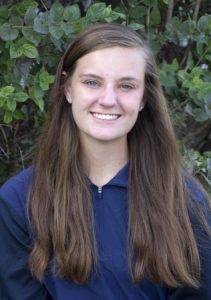
We always like to check in with our alumni. Trey Whitfield graduated with his Bachelor’s degree in Agronomy and a specialization in Soils from Iowa State University in May of 2021. Trey shares that he currently works for ServiTech as an Agronomy Specialist.
Iowa State’s goal is to help all undergraduate students be and feel prepared for the next steps in their lives, whether moving on to grad school or starting a full-time position. “I believe ISU gave me the proper instruction and knowledge in agriculture to have a solid base to stand on and build my career as an agronomist,” Trey shares. The College of Agriculture & Life Sciences presents students with a terrific opportunity to learn and grow as young professionals in the industry. Trey expressed how Iowa State will give you a great starting point to build your career in agriculture.
As an Agronomy Specialist with ServiTech, Trey uses precision ag software and new equipment to do soil sampling in the spring and fall, tissue sampling, and crop scouting. He also focuses on making nutrient and product recommendations for the farmers ServiTech works with. He works on equipment calibrations, manure management plans, and even drone flights. Agronomists wear a lot of hats, and they need to become skilled and knowledgeable about many aspects of the agronomy area.
As a recent grad in the workforce, we see Trey’s advice as extremely important for undergraduate students to hear. Trey had a lot of great advice to share with agronomy undergraduates. “Don’t get stuck on the thought of trying to know everything about agriculture before you graduate. The real learning goes on after you graduate in the first few years of your career. Try your best to retain what you are being taught, but it is not a big deal if you don’t absorb every little thing you hear in class. As long as you are honest, have a strong work ethic, and enjoy your work, you should thrive in life after college.”
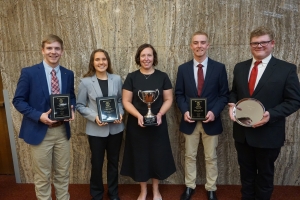
Iowa State’s Crops Team recently returned from competing at the NACTA Judging Conference. The team returned to Ames with great success to share. Congratulations to the team and their coach Dr. Mindy DeVries on a great season. Mindy shares, “Although 3 of the crops students are seniors and graduating, the returning juniors, sophomores, and freshmen are already talking about next semester’s contests. I think our future is in good hands!” Results from NACTA are in detail below.
Results:
First Place Crops Team: Iowa State (Megan Blauwet, Wyatt Bailey, Alex Coughlin, and Mariah Vos)
Crops Team Member: Megan Blauwet, Wyatt Bailey, Alex Coughlin, Mariah Vos, Jacob Ewart, Tom Thompson, Haley Burlage, Tyler Atkinson, Aidan Bobholz, and Karl Graulich
3rd Overall Individual: Megan Blauwet
4th Overall Individual: Wyatt Bailey
First Place Plant & Seed Identification: Wyatt Bailey
2nd Place Precision Ag Team: Iowa State (Aidan Bobholz, Alex Cecil, Alex Coughlin, and Tom Thompson)
4th Place Overall Individual: Alex Coughlin
First Place Problem Solving Portion: Alex Coughlin
3rd Place Ag Knowledge Bowl Team: Iowa State (Megan Blauwet, Wyatt Bailey, Jacob Ewart, and Mariah Vos)
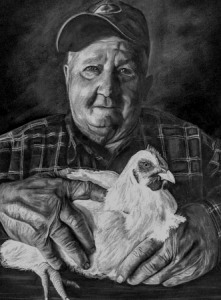
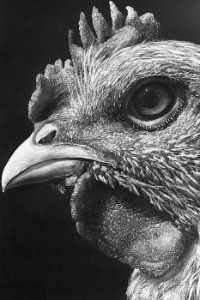
We love to brag about our agronomy students and their accomplishments in and outside the classroom. Wyatt Bailey is quite talented when it comes to his artistic abilities. His art was placed on display in Kildee Hall recently. The collection of eleven pieces represents Wyatt’s experiences in agriculture. The artworks vary in medium and context, from charcoal and graphite to livestock and crop exhibition. Wyatt shares, “for specific titles and meanings, I encourage people to view my display in Kildee Hall in the main hallway!”
Wyatt’s talent began in elementary school, where he began sketching and creating pieces. His dad is also extremely artistic, and he looked up to his work growing up. “Once I got to high school, I became serious about drawing, and I found my style in drawing pieces representative of the everyday life of agriculture,” Wyatt shares. His high school had an excellent program that helped nurture his talent and push him to better his skills. “I developed an undeniable passion for drawing and continue to make pieces on the rare occasion that I have some free time,” Wyattshares.
His high school art program pushed students to be competitive with the art they were creating. This led Wyatt to compete in different art contests, which already enjoyed the competition. Wyatt shares that, to his surprise, judges seemed to catch on to his pieces well, and he has been lucky enough to have drawings of his hung at the Iowa State Fair, various regional contests, and even the United States Capitol building in Washington, D.C!
With college life and everything Wyatt is involved in, he hasn’t started any new pieces recently. He does have a few projects that he has slowly been adding to over the last year. A goal that he has always had regarding his art is being able to make it a small business venture. Wyatt shared, “once I learned how to professionally scan my drawings to make prints; I discovered an opportunity to create a business out of my drawings. I currently sell prints of my works.”
We are very proud of the ISU Crops Team, placing first overall in Manhattan, Kansas on March 5th. They will be traveling to North Platte, Nebraska to compete at the NACTA Judging Conference this weekend. More highlights and placings are below.
A research project by Iowa State University soil scientists provides new insight into the complex picture of phosphorus loss from farmland and evidence proving phosphorus runoff is often underestimated.
One of the project’s primary objectives was to determine how much dissolved phosphorus (P) in surface runoff may not be accurately measured by common methods. The work was conducted over three years with funding from the Iowa Nutrient Research Center at Iowa State.
“Conventional views of P loss are that most of it is tightly bound to soil particles, so P is not a problem as long as erosion is controlled. Our study shows this is not necessarily the case,” said Antonio Mallarino, professor of agronomy and ISU Extension and Outreach soil fertility and nutrient management specialist. He led the project, working with Mazhar U. Haq, research specialist in agronomy, and former graduate student John D. Jones, Jr.
Mallarino’s team used soil and surface runoff samples from several Iowa field experiments. From these samples, they measured P loss from corn and soybean fields that had different soils, P sources, tillage management and conservation practices. Their findings provide new knowledge and confirm a growing body of research nationally that shows more P leaves fields dissolved in runoff than expected. And that some conservation practices may not reduce – or may even increase — dissolved P loss.
“All the P that leaves the field is potentially important,” Mallarino said. “However, dissolved P is in a form that is highly bioavailable, so it is of particular concern for its contribution to eutrophication of freshwater and coastal waters and harmful algal blooms.”
Measurement
Phosphorus is characterized in a number of ways, and there are different approaches to monitoring where and how it shows up in the environment. Another one of the team’s primary research objectives was to compare measurement methods to better understand how P and its different forms can most accurately be estimated.
“Classic methods to test for runoff total bioavailable P have been complicated, time-consuming and expensive to use,” Mallarino said.
A significant achievement of this research has been to show that the common measurement of dissolved reactive P (DRP) in runoff often significantly underestimates loss of total dissolved and bioavailable P, according to Mallarino.
Furthermore, he said, the research demonstrated that a simple test of total dissolved P performed on filtered runoff with inductively coupled plasma (ICP) spectrometry, provides comparable results to other methods for measuring total dissolved or bioavailable P, and is much cheaper and easier to conduct.
“This part of our work should help inform – and improve — efforts to track total dissolved P loss from soils,” Mallarino said.
Management
Dr. Antonio Mallarino
Another major objective has been to refine knowledge and guidelines for best management practices to reduce dissolved P loss with runoff. The researchers looked at the influence of different tillage systems and P sources, as well as potential benefits from cover crops and use of two soil amendments, alum and gypsum, thought to reduce P loss.
What they found showed that applying P beyond the amount needed by crops drastically increases dissolved P loss. In addition, no-till management increased the proportion of total P loss comprised of dissolved and bioavailable forms, reflecting findings from some other long-term research efforts, especially in the Great Lakes region.
With tillage to incorporate the fertilizer or manure, the proportion of dissolved P in runoff was smallest where solid poultry manure was applied and larger after fertilizer or liquid swine manure. With no-till, however, the proportion of dissolved P loss was highest for fields where fertilizer was applied. Where manure was applied to no-till fields, loss did not significantly differ based on the type of manure — probably because swine manure was injected into the soil, according to Mallarino.
Using a winter cereal rye cover crop reduced all the forms of dissolved P in runoff — in contrast to a study in the Great Plains that showed an increase in dissolved reactive P loss where cover crops were used. The Iowa research showed benefits from cover crops for fields managed with both tillage and no-till.
Of the two soil amendments tested, only the aluminum sulfate (alum), consistently reduced the loss of dissolved and bioavailable P.
“This work to better understand the forms of P loss is critically needed as we work to reduce loss to downstream water bodies,” said Iowa Nutrient Research Center Director Matt Helmers. “It highlights the importance of dissolved P loss and the need to better understand the impact of conservation practices on dissolved P.”
Complex Interactions
Mallarino and his team have a final report with more details posted on the Iowa Nutrient Research Center website. They are also working on other publications to highlight specific aspects of their long-term research and suggest next steps.
“Soils, rainfall, management and other factors interact in complex ways that mediate P movement from fields,” Mallarino said. “Even so, the best advice still is to avoid overloading soils with P. Reduce the amount of P in fertilizer and manure applications to optimal levels needed by crops and use the Iowa P index to monitor the risk of loss when using nitrogen-based manure application rates. Otherwise, our research confirms that excess accumulated P is going to move off fields. Just how much will depend on rainfall and conservation practices.”
Antonio Mallarino will be presenting “Performance of In-field Practices at Reducing Dissolved and Particulate Phosphorus Loss” for the Iowa Nutrient Research Center’s Spring Water Quality Research Seminar series, March 23, at 3:10 p.m. Find more information or register at: https://go.iastate.edu/FGQX5D.
Leah Philipp graduated with her Bachelor’s degree in Agronomy and a minor in AST (Agricultural Systems Technology) from Iowa State University in May of 2021. Leah shares that she originally went to orientation in June 2018 as a Genetics major and quickly realized she wanted to work more directly with growers instead of working in a seed lab. Today, she works at River Valley Cooperative (RVC) as an Agronomy Account Manager in Ryan, IA.
Iowa State’s goal is to help all undergraduate students be and feel prepared for the next steps in their lives, whether moving on to grad school or starting a full-time position. College is the time to try different classes to find out what you do or don’t like. Leah expressed how helpful it was that she could take various classes to help her narrow down what path she wanted to take in the agronomy industry. “All of my classes were beneficial, but my favorite part was being able to follow my heart a little bit, too. For example, I figured out pretty early on I wanted to work directly with farmers, so I was able to join Crops Team to learn more about what I’d need to know to be successful, such as weed identification, applied math (such as seeding rates, sprayer calibrations, etc.), and the herbicide groups and how they all worked.” Leah shares. Outside of classes, there are many clubs to get involved in within the CALS community to help you expand your knowledge and grow your skills.
Leah is currently working at River Valley Cooperative (RVC) as an Agronomy Account Manager in Ryan, IA. Leah shares, “I knew I wanted to come back to the community I grew up in because I saw the way this area would do anything to help a neighbor in need; wherever I ended up, I wanted to be that person for someone else.” As an Agronomy Account Manager, she is a problem solver, supporter, and advisor. Her responsibilities and tasks change season to season depending on her client’s needs. During the summer months, she scouts fields for various pest pressures. She can tag along in combines in the fall to discuss what worked and what didn’t and see how programs worked. She creates chemical programs for customers that target their specific needs and previous issues during the winter. In the spring, she is responsible for making sure everything is organized and as smooth-sailing as it can be.
As a recent grad in the workforce, we see Leah’s advice as extremely important for undergrads to hear. Leah shares, “Follow your heart and have faith. I had my fair share of things not working out quite how I originally planned, but I’ve been so blessed to be called down this road. Trust me when I say everything will work out exactly how it’s supposed to. You’ll know where you’re going, even when you don’t think you do.”
Senior in Agronomy, Robyn Byl is currently part of the National Student Exchange (NSE) program. She is currently studying at the University of Alaska Fairbanks for the spring semester. Robyn is the only Iowa State student at the school in Alaska. She shared that she is taking a normal course load where most of the classes are natural resource-based. The university she is at does not have an agricultural program, so she is not taking any agricultural courses.
A few of her courses are Aquaculture, Ornithology (study of birds), Greenhouse Management, Earthquakes, Volcanoes, and Glaciers. These courses are diverse from her usual lineup of classes from a semester at Iowa State. An advantage of the NSE program is traveling somewhere new and learning from a new perspective. Of course, she has learned a couple of other things outside of the classroom, such as snowshoeing and cross country skiing. While she was there, she was able to see the start of the Yukon Quest Dog Sled Race. A couple of other activities that she has done that normal Alaska college students participate in are attending hockey games, a northern lights photography class, and viewing ice sculptures at an ice park. Three things on her bucket list for the rest of her semester are visiting the Denali National Park, the ice caves, and the hot springs.
Robyn is originally from NW Iowa, and Alaska is a big change, so of course, the question on everyone’s mind is probably, “Why Alaska?” Robyn shared, “I wanted to go on this trip because I always wanted to travel while in college, but Covid limited a lot of the abroad opportunities. This program offered the chance to travel and study in a new place while dealing with slightly less logistical issues due to being inside the US.” The NSE was a great program for her because studying at a university and having that support system along with housing and a meal plan helped the transition to a new state.
Iowa State University scientists are learning how to peer back through millennia of domestication to learn how a wild grassy plant known as teosinte developed into corn, the modern cash crop grown across the globe. The research allows scientists to compare genes in corn against its wild ancestor, which could help plant breeders identify advantageous traits that may have been bred out of teosinte over the centuries.
The researchers published their findings recently in the academic journal Frontiers of Plant Science, detailing a new biotech tool that harnesses cutting-edge techniques to produce fertile transgenic teosinte plants for the first time.
Humans began domesticating teosinte, a wild grass native to Mexico, roughly 10,000 years ago. Each teosinte plant yields only up to a dozen kernels, which are tough and contain less nutrients than modern corn. So people selected individual teosinte plants for higher yields, eventually developing new varieties with their own unique traits.
But some of the original genetic material from teosinte got lost along the way. Identifying this genetic material could help breed better corn today, or at least offer scientists clues about how to better harness the genetic diversity of corn, said Jacob Zobrist, a graduate student in agronomy and first author of the study.
“We don’t know what we don’t know about those ancestor traits,” Zobrist said. “It’s our hope to identify traits in the wild ancestor that would be helpful for modern maize. Those traits could include disease resistance and stress resistance as well as nutrient content and maybe even improving growing and flowering times.”
The new study details how the scientists discovered a robust callus induction and regeneration protocol using whorl segments of seedlings germinated from mature seeds. That means the researchers were able to produce callus tissue, which is similar to stem cells that are undifferentiated and haven’t yet developed into variant cells.
These undifferentiated callus cells are amenable to the introduction of new DNA via transgenic technology. Using gene editing technology such as CRISPR, researchers can now target specific teosinte genes and switch them off, giving them a new level of understanding of how the wild plant was domesticated into a global staple crop.
New biotech tool expands understanding
It’s a little bit like reaching back through time to see what traits ancient plant breeders selected for, said Kan Wang, the Global Professor of Biotechnology in agronomy and corresponding author of the study. Wang’s laboratory began studying teosinte in 2010, and she said the new publication represents a major step forward in understanding teosinte and the origins of modern corn.
“This is going to open up a lot of possibilities for many people who are interested in either basic research or agricultural applied research,” said Wang, who is currently a rotating program director for the National Science Foundation.
Wang credited Zobrist’s contributions for making the overall study a success. Zobrist joined Wang’s lab in 2018 with support from the National Science Foundation’s Predictive Plant Phenomics Fellowship, which provides innovative data-enabled science and engineering training to students with experience in plant sciences. Zobrist’s contribution to the research was to make the transformation repeatable by optimizing the culture medium used to grow the teosinte plants. Zobrist found a new tissue-culture regimen that included plant hormones in the growth medium.
“We’ve developed the tool, and without it, it’s very difficult to understand teosinte. One of the main players who made that happen was Jacob. He did critical work,” Wang said.
Zobrist is a native of Spencer, Iowa. He completed his undergraduate studies at Iowa State before taking a job with Corteva for five years and then returning to Iowa State to begin graduate work in 2017.
“I am fortunate to be a graduate student at a time when research and genome editing technologies are progressing at a rate that allowed me to put all of the pieces together into a functional and reproducible transformation method,” he said.
Other co-authors of the study include Susana Martin-Ortigosa, Keunsub Lee, Qing Ji and Mercy Azanu, all current or former members of Wang’s lab.
Agronomy graduate student Luis Bentancor, along with associate professor Dr. Bradley Miller, has been awarded $14,964 in grant money to study soil health indicators in areas impacted by the Dakota Access pipeline installation.
The North Central Region of Sustainable Agriculture Research and Education (NCR-SARE) awarded the funds as part of their Graduate Student Sustainable Agriculture Grant Awards.
Bentancor said they spent about a month to get the proposal for the grant ready and it took about three months to hear they had been awarded the funds.
He said this project came about because of concerns raised by farmers who have observed lower crop yields on the Right of Way (ROW) since the installation of the Dakota Access Pipeline (DAPL) in 2016. This creates a unique opportunity to study soil health, resiliency and resistance across a spectrum of soil parent materials, landscape positions and management practices.
“We have designed a questionnaire for farmers located in the Right of Way to survey their interests to participate in this project, where we ask questions about the conditions when the pipeline was installed, application of any special treatment after pipeline installation, willingness to be with us in the field during sampling among others,” Bentancor said. “We are going to assess physical, chemical and biological properties to evaluate the different soil health indicators in two different physiographic regions, Des Moines Lobe and Southern Iowa Drift Plain.”
“We are going to select fields in central and southeast Iowa, to capture a range of soils in Iowa. We will have different soil materials, different hillslope conditions and management practices,” Bentancor said. “So, we will have a variety of conditions to assess how the soil health evolved after six years following the pipeline installation.”
A large amount of the grant money will be used to conduct lab analysis on the soil and for undergraduate training on different lab procedures in the process. Bentancor will collect the soil samples, perform many of the lab measurements, and analyze the final results.
“Our hypothesis is that the capacity of soil health indicators to recover to their original condition will vary by parent material, landscape positions, and management practices,” Bentancor said. “The goal is to create a unique dataset of soil health indicators across a range of soil-forming conditions to better understand soil resiliency and the factors that support the regeneration of healthy soil.”
To accomplish this, samples will be taken along the DAPL path implementing a sampling design stratified by parent material, landscape positions, management practices and disturbed versus undisturbed areas. The Pipeline ROW will then be divided into three parts: pile area, trench area and traffic area.
Relationships between measured soil properties and patterns in remote sensing data will be detected using machine learning. “With this additional step we are seeking to produce a spatially predictive model capable of mapping the soil’s health indicators measured within and surrounding the pipeline ROW,” Bentancor said.
They expect to finish the fieldwork by the end of fall 2022 if the weather cooperates, with the data analysis and lab work to be done by October 2023.
Haley Stahl, senior in agronomy, is the fall 2021 recipient of the College of Agriculture and Life Sciences Student Council Leadership Excellence Award.As an Iowa State University student, she was involved in various clubs and organizations on campus. During her junior year, she had the opportunity to take on a role as an International Cultural Ambassador through the Cultural Ambassador Program. This semester-long program pairs international students and U.S. students based on mutual interests and hobbies. She was also involved in the Salt Company and the Ames Flyers Club. While she was involved in the Agronomy Club, she first served the club as the program chair and then as the president her senior year.“I have been a leader in college by supporting and collaborating with my peers, having a strong drive to better the organizations I am a part of, and working to motivate others to take opportunities out of their comfort zone,” Stahl said. “What made my time so memorable was the amazing people I met through these organizations and the experiences we had.”
The College of Agriculture and Life Sciences had a tremendous impact on Haley during her undergraduate career. She is thankful for the financial support CALS provided her in the form of scholarships.
Besides Haley’s college involvement and professional experiences, she also has her remote pilot drone license. She was able to get this license her freshman year during an internship with Beck’s Hybrids.
The company needed another pilot, and she took this opportunity to learn a new skill and get out of her comfort zone.
“Having a drone license has allowed me to be a bigger competitor for internships, to expand my technological research skills, and have fun,” Stahl said.
When it comes to her experience at Iowa State, it is easy to say she had a very successful and memorable journey. She was able to grow as a leader and as a person through the experiences she had and the connections she made both personally and professionally.
Haley’s advice for current students is to “aim for at least one leadership position while in college and commit to an experience that is new and outside your comfort zone. Doing these two things will advance you personally, career-wise, and organizationally.”
After graduation, Stahl will be working in research or the extension field. She appreciates all who have helped her find success as a student and become prepared for her next adventure.
“Thank you to everyone who has supported me during my time at Iowa State! I feel incredibly blessed for the experiences I’ve had and the wonderful, supportive people I’ve met along the way,” Stahl said.
For the first time since 1988, the ISU Crops Team won first place in both Fall collegiate competitions. The team was made up of Wyatt Bailey, Caitlyn Bruntz, Alex Coughlin, and Tom Thompson. The team attended competitions in Kansas City and right at home in Ames. Between these two competitions, the team ended up with over 30 awards. The team’s hard work and determination definitely shine through their success. We are excited to see how future competitions go for this amazing team. We are extremely proud of the ISU Crops Team and all of the success they have found this year!
Detailed Awards:
Collegiate Crops Contest – November 16th in Kansas City, Missouri
Participants: Wyatt Bailey (Team), Caitlyn Bruntz (Team), Alex Coughlin (Team) and Tom Thompson (Alternate)
1st Place Team Overall
1st Place Team Grain Grading – All-American Status
1st Place Team Seed Analysis
2nd Place Team Identification
1st Place Individual Overall – Wyatt Bailey
1st Place Individual Grain Grading (3-way tie) – All-American
1st Place Individual Seed Analysis
4th Place Individual Identification
4th Place Individual Overall – Caitlyn Bruntz
3rd Place Individual Grain Grading – All-American
2nd Place Individual Seed Analysis
6th Place Individual Identification
6th Place Individual Overall – Alex Coughlin
1st Place Individual Grain Grading (3-way tie) – All-American
6th Place Individual Seed Analysis
7th Place Individual Identification
Collegiate Crops Contest – November 19th in Ames, Iowa
Participants: Wyatt Bailey (Team), Caitlyn Bruntz (Team), Alex Coughlin (Team) and Tom Thompson (Alternate)
1st Place Team Overall
2nd Place Team Grain Grading
1st Place Team Seed Analysis
2nd Place Team Identification
1st Place Individual Overall – Wyatt Bailey
1st Place Individual Grain Grading
4th Place Individual Seed Analysis
4th Place Individual Identification – All-American
5th Place Individual Overall – Caitlyn Bruntz
9th Place Individual Grain Grading
2nd Place Individual Seed Analysis – All-American
3rd Place Individual Identification – All-American


 We always like to check in with our alumni. Trey Whitfield graduated with his Bachelor’s degree in Agronomy and a specialization in Soils from Iowa State University in May of 2021. Trey shares that he currently works for ServiTech as an Agronomy Specialist.

 shares.