After graduating Iowa State in 2018, Erik Endacott worked seasonal jobs across the West Coast before the Peace Corps changed the direction of his life.
“Unfortunately, after only 6 months the Covid-19 pandemic hit, and I was sent home along with all 7,000 Peace Corps volunteers around the world,” said Erik.
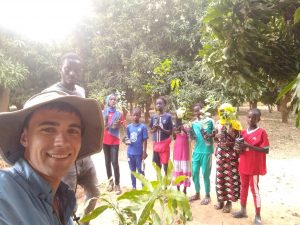
He took a job as a soil conservation technician in Roseau, Minnesota. Months went by and what he started in Senegal never left him. In May of 2021 he returned on his own to finish his Peace Corps projects. He met Mamadou Babacar Diop after arriving. Mamadou had started Volunteer Network for a Green and Prosperous Sahel (VNGPS). Erik was intrigued. The two started working together.
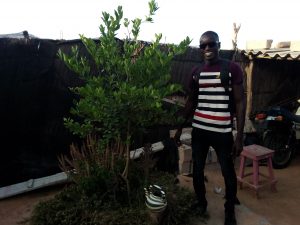
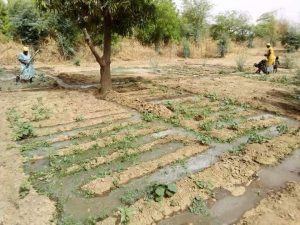
VNGPS is a network of volunteers spread all across the Sahel region of Senegal who plant fruit trees in villages and build community farms. It also educates people on environmental problems in the region and organic permaculture techniques to raise their crop yields.
The goal is to slow Sahara desertification southward into the Sahel region, increase biodiversity, fight climate change while offering locally grown food to combat malnutrition, plus aid in the financial security and independence of Senegalese people.
“People in the region are being lifted from poverty sustainably because of the actions and efforts of VNGPS,” said Erik. “Their fruit tree planting and community farm start-ups are important, because most people in the region go 9 months every year without eating a fresh vegetable or fruit.”
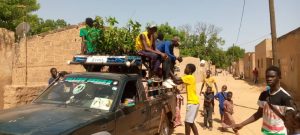
Based on a volunteer network, no one involved in VNGPS is paid. Not even Mamadou or Erik. Every dollar donated goes directly toward the project. Without a salary, Erik splits his time between Senegal and the States. Originally from Fallon, Nevada, Erik works for Tesla to fund travel and help support the VNGPS mission. Founder and President Mamadou Babacar Diop is a teacher, in addition to operating the organization.
“Mamadou Diop is a very generous, selfless and honorable man. He is the type of person who gives his whole self to benefit his community. It is a great honor for me to work alongside him,” said Erik.
“I’d really love to see VNGPS financially supported enough to offer Mamadou a small salary,” said Erik. “I’ll keep helping it expand as a volunteer.”
The foundational knowledge Erik learned in Agronomy put him in prime position to act when he was put in the right position to find and follow his passion.
Learn more about the Volunteer Network for a Green and Prosperous Sahel online at vngps.org.






Erin Smeltzly turned her agronomy degree into a career with Syngenta, Golden Harvest after graduating in 2021. Her experience as an undergrad was so successful she enrolled in the Iowa State MS in Agronomy online master’s program.
Agronomy students Tess Kern and Rebecca Johnson traveled to Thessaloniki, Greece to attend the American Farm School Spring semester.


Kevin Chiteri grew up on a small farm in Western Kenya. Early on, he was exposed to growing crops for household consumption and surplus for sale. He obtained a B.S. (2013) in Microbiology & Biotechnology from the University of Nairobi, Kenya. He was involved in advocacy for environmental sustainability, biotech adoption, and favorable government policies spurring the creation of bio-entrepreneurship opportunities for biosciences graduates. He obtained an M.S. (2017) in Molecular Biology from Bowling Green State University, Ohio. In 2019, he started his Ph.D. in Genetics and Genomics with Predictive Plant Phenomics (P3) specialization with Dr. Arti Singh. Kevin researches basic questions by exploring the phenotypic and genotypic diversity of the root & leaf architecture of the Iowa mungbean diversity panel. The first objective, “Dissecting the Root Phenotypic and Genotypic Variability of the Iowa Mung Bean Diversity Panel,” was recently published in
Matheus Krause is originally from Pato Branco, PR, Brazil. Spending time on his grandpa’s business and friends’ farm when growing up gave him a strong interest in agriculture and livestock. Following his dreams, he obtained a B.S. in Agronomy in 2015 with a specialization in France, followed by a master’s degree in Genetics and Plant Breeding in 2018 from the University of São Paulo. Later that year, Matheus started his Ph.D. in Plant Breeding at Iowa State University under Dr. William Beavis in the G. F. Sprague Quantitative Genetics Group. His graduate research work focuses on the development of estimation methods to obtain unbiased realized genetic gain using data from routine field trials, and on the development of novel breeding strategies to ensure optimal trade-offs among competing objectives. Matheus published a paper in
Yan Zhou, originally from Hebei, China, obtained a B.S. in Plant Science from Agricultural University of Hebei in 2009 and a M.S. in Genetics from Nanjing Agriculture University in 2012. He then joined the industry working on male sterile genes in maize and helped develop a hybrid seed production system using 
President-elect beginning a three year succession starting in 2023. He will serve as President in 2024 and past-president in 2025.