Major USDA grant supports pioneering agricultural genome to phenome collaboration led by Iowa State University

corn field at dusk

Headshot of Dr. Patrick SchnableThe U.S. Department of Agriculture’s National Institute of Food and Agriculture announced today it is awarding more than $1.8 million to support the work of the Agricultural Genome to Phenome Initiative (AG2PI) being led by Iowa State University in collaboration with the University of Nebraska-Lincoln and University of Idaho.

The goal of AG2PI is to help advance multidisciplinary crop and livestock research by addressing genome to phenome challenges, developing solutions for research infrastructure needs and sharing solutions across kingdoms. It aims to foster collaborations of crop and livestock scientists with colleagues in diverse areas, including data science, statistics, engineering and social sciences, to improve the long-term efficiency and resilience of U.S. agriculture.

Researchers working from genomics to phenomics explore how genomes (organisms’ complete set of DNA) influence the expression of observable, phenotypic traits.

The primary focus of the new grant will be to provide competitive funding for projects that will implement a vision for research the AG2PI has been developing with community input over the past two years.

“The pioneering work supported by this initiative is beginning to provide scientists and breeders with the tools needed to adapt agricultural systems to improve their profitability and make them more sustainable and resilient to climate change,” said Distinguished Professor Patrick Schnable, project director for the transdisciplinary, multi-institutional grant, the Iowa Corn Promotion Board Endowed Chair in Genetics and director of the Plant Sciences Institute at Iowa State.

The new grant is the third and largest award made through USDA NIFA’s AG2PI national initiative launched two years ago as part of the 2018 Farm Bill. The first, three-year USDA award was geared toward building a cross-kingdom community of researchers. The second award focused on expanding a small seed grant program to recruit involvement and innovation of researchers across the country. So far, the AG2PI seed grants have supported 27 research projects at levels ranging from $15,000–$100,000. This third award would further expand the grant program with larger, “coconut”-level (big seed) grants of up to $250,000, aimed at generating greater interest and impact.

“Achieving sustainable genetic improvement in agricultural species is a `wicked problem,’ meaning that a solution requires diverse and creative teams of scholars, producers and stakeholders,” said Jennifer Clarke, lead researcher directing the project seed grants and director of the Quantitative Life Science Initiative at the University of Nebraska-Lincoln. “This award will make it feasible for such teams to invest more deeply to tackle related problems for the benefit of both agriculture and society.”

Nurturing researchers getting established in their careers has been one of the program’s goals: Of 142 seed grant team members and collaborators, about one-third consider themselves to be in the early stages of their professional career.

Since its inception, the national AG2PI team has sponsored or co-sponsored an ambitious set of virtual field days, workshops and mini-conferences. Products from the initiative also include a set of white papers about related research, opportunities, gaps and challenges. In early September 2022, AG2PI co-hosted a hybrid conference with USDA-NIFA in Ames to bring together researchers and other experts from diverse institutions to visualize the future of agricultural genomes to phenomes work. Recordings from these events can be accessed for free on the initiative’s website, https://www.ag2pi.org/.

Although all USDA funds remain in the US, researchers from more than 155 countries have participated in the project’s field days and workshops. “We are connecting with researchers around the world,” Schnable said. “While the AG2PI program is focused on increasing profitability, sustainability and resilience here in the United States, agriculture is a global endeavor, and science benefits when collaboration comes from everywhere.”

Other leaders on the new grant include: Professor Christopher K. Tuggle and Distinguished Professor Jack C.M. Dekkers, animal science, Iowa State University; and Associate Professor Brenda M. Murdoch, animal, veterinary and food sciences, the University of Idaho. A stakeholders committee that involves nearly 20 industry organizations is chaired by Iowa State alumnus David Ertl (’82 MS, ’84 PhD plant breeding), technology commercialization manager for the Iowa Corn Growers Association.

“This genome to phenome research will have far-reaching effects,” Ertl said. “It will allow breeders to create improved varieties faster, allow farmers to produce more resilient crops and livestock, and give consumers more choices for sustainably produced food.”

This work is supported by the Agricultural Genome to Phenome Initiative, grant number 2022-70412-38454, project accession number 1029371, from the USDA National Institute of Food and Agriculture.

New public-private partnership seeks Iowa farmers to advance nitrogen fertilizer recommendations

Aerial view of nitrogen test plots in a field
Iowa State University led research project uses on-farm data from hundreds of trials


AMES, IOWA, September 14, 2022 – Iowa State University (Iowa State), has partnered with agricultural service providers, Iowa farmers and their advisers to launch the Iowa Nitrogen Initiative – a first-of-its-kind public-private partnership that will leverage on-farm data to generate continuous improvements in resource use efficiency. The Iowa Nitrogen Initiative is currently recruiting Iowa farmers to join the network of on-farm trials.

Using the latest advances in precision agriculture, in close collaboration with Iowa farmers, the Iowa Nitrogen Initiative will deploy hundreds of on-farm, scientifically robust trials every year. Data from these trials will enable Iowa State University scientists and engineers to apply the latest advances in super-computing and quantitative modeling to improve nitrogen fertilizer recommendations for the benefit of productivity, profitability and environmental performance.

“Iowa farmers depend on the best science when making decisions about crop inputs including nutrient management,” said Iowa Secretary of Agriculture Mike Naig. “I encourage farmers to consider participating in this important initiative that will deliver valuable data and recommendations from experts at Iowa State University.”

Nitrogen fertilizer is among the most critical inputs to crop productivity – and one of the costliest. When applied at the optimum rate, nitrogen boosts productivity and profitability while minimizing losses to the environment. However, the optimum rate is incredibly difficult to forecast and can vary by more than 100% from field-to-field and year-to-year.

Current nitrogen fertilizer recommendations do not address factors that contribute to this variability, such as weather or the multitude of decisions farmers must make each year like seed selection and soil management.

Participation and collaboration with Iowa farmers through the on-farm trials will make this project a success. Approximately 150 preliminary trials were conducted in 2022 and researchers seek to increase this number to over 400 for 2023.

Participating in the nitrogen trials is easy. Farmers commit to reserving a small portion of their farm field (four to seven acres) for a personalized variable rate nitrogen prescription. All other farming decisions, including the nitrogen application for the rest of the field, remain with the farmer.

“My farm participates in the Iowa Nitrogen Initiative trials, because I want to better understand the science behind what my corn crop needs and how I can improve water quality. Participation is easy since we already use yield monitors and variable rate nitrogen application,” said Roger Zylstra who farms in Jasper County and chairs the Iowa Nutrient Research & Education Council.

Researchers are seeking the help of Iowa farmers to meet their goal of 400 trials in 2023. The Iowa Nitrogen Initiative’s network of farmer participants enables researchers to gather data on real-world scenarios, develop decision support tools with input from the people who will use them, and return information to farmers about optimum rates on their farms. The trials can be included in any Iowa corn field – regardless of the management.

Farmers, certified crop advisers, and custom fertilizer applicators interested in participating should contact Melissa Miller, Project Director for the Iowa Nitrogen Initiative, by emailing millerms@iastate.edu or calling 515-567-0607. Learn more at agron.iastate.edu/ini

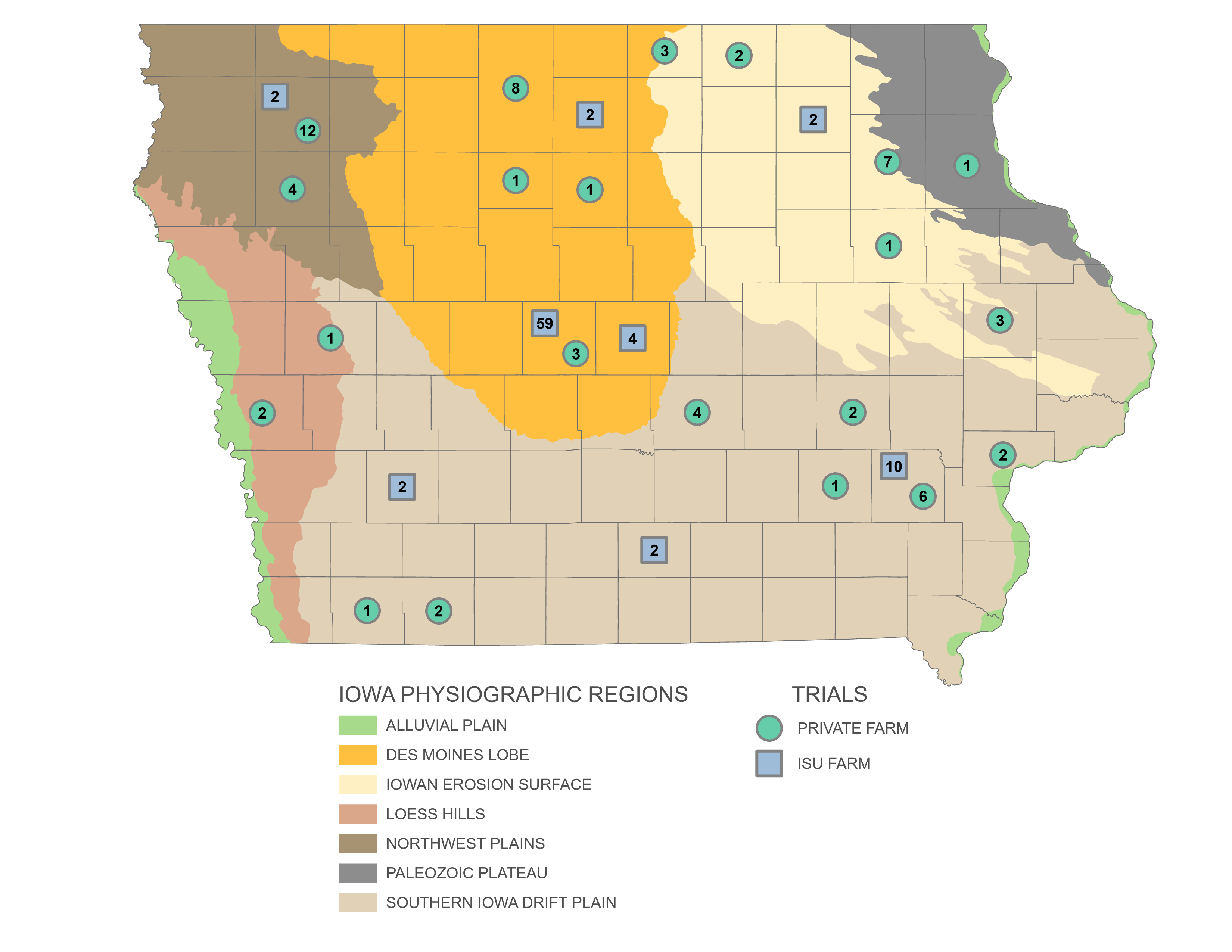
Iowa Nitrogen Initiative on-farm trial locations pin pointed on a map of Iowa's physiographic regions

Help us get a trial in every county! Email for more information.

Breaking Plant Breeding Barriers with UAS Technology

Choosing the best crop variety to maximize yield and profitability while still staying within budget is vital to any farm, whether its 100 acres or 100,000. It is also a driving objective for plant breeders that develop these varieties for farmers.

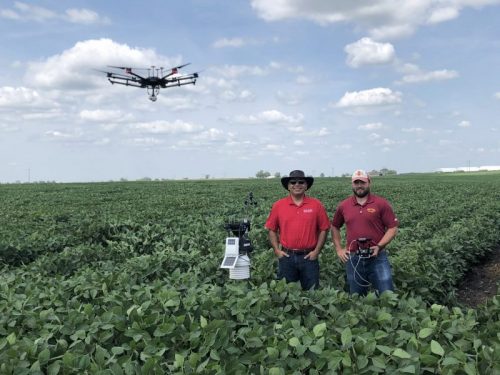
Plant phenotyping is an important part of that decision-making process in plant breeding and for farmers. Agronomy and engineering researchers at Iowa State University and elsewhere have published a paper reviewing the different equipment and methods of phenotyping a field using the latest unmanned aerial system (UAS) technologies while not breaking the bank.

Iowa State researchers, headed by Matt Carroll, a fourth-year graduate student in Dr. Asheesh Singh’s lab, collaborated with Dr. Wei Guo and colleagues at the University of Tokyo, as well as with researchers at the University of Arizona who provided the cyber infrastructure expertise to make this review possible.

“We are excited about this paper and being Open Access so people can read it and have this information for their use. The approach that Matt and team took was to ensure that we are removing or minimizing the barrier of entry for people who have an interest in utilizing drone-based applications or that can lead to objective or action-based outcomes for farm production or research applications,” Dr. Singh said.

Dr. Singh said the motivation or this paper actually came out of conversations with farmers, who wanted to know how to gather the information on phenotyping themselves. The target for this review paper is not only researchers, but farmers as well and even drone enthusiasts who want the ability to obtain accurate information from crops.

“Matt Carroll is a good example of someone who comes from a farming background who has over the years acquired these sophisticated technical and analytics skills that were not in his routine usage at the farm,” Dr. Singh said.  “And using some of these tools and technologies and then using the data analysis puts him in a prime position as he also understands the constraints of farming as well as the opportunities for growth and profit.”

Carroll explained that a phenotype is the genetic makeup of the plant and the environment it is experiencing. Basically, what you can see, like how green is the canopy, the height—what you can measure.

“You are looking for the best phenotype, and indirectly that means it’s the best genotype, and over time you whittle it down to your best [varieties] in the breeding program,” Carroll said. “When experimental varieties are harvested at the end of the year, there is a lot of documenting, a lot of notetaking looking at yield, disease incidences, and using things like drone based imagery is useful in finding out other information on which lines to keep and which lines to discard at the end of the year.”

The process of using UAS for phenotyping has been around, but is gaining steam. Before it was all legwork, literally.

“Before using this technology, it was going out and taking notes in the field, going plot to plot covering larger areas in field,” Carroll said.

Carroll’s paper reviews the different terminology to introduce UAS, which is a system typically consisting of hardware (i.e., drone and cameras) and the control software (i.e., the programs that help run the hardware efficiently).

“My first project with UAVs was dealing with iron deficiency chlorosis. IDC causes millions in crop loss each year for soybeans, so we were looking at how can we use UAS to identify these deficiencies,” Carroll said. “It is a very visual symptom so that is why we started with that.”

Carroll then spent two weeks at the University of Tokyo with Dr. Guo, learning about UAS and how to extract data from the images.

“Out of that collaboration and internship in Japan we decided to write a review paper on it,” Carroll said. “There is kind of a barrier to entry to phenotyping like this, like what type of cameras do I need, what drone, what else needs to be purchased along with it. We wanted our paper to be something that people could read and give beginners a starting point and allows them to be able to use this technology.”

UAS are becoming an increasingly useful tool for crop producers all over, Carroll said. He did say that UAS does only see what is on top, so anything below canopy and or root based traits would need some different technologies, like ground rovers.

“The soynomics team at Iowa State University is looking at above and below canopies to marry these different traits into the optimum outcome,” Carroll said.

He said to make sure to learn all local regulations when flying drones, and make sure to know how to extract the data that is gathered.

“The analysis downstream is important, figuring out how to get your data out of it, they are becoming a lot more accessible, some pay-for services, some open source,” Carroll said. “Still a long way to go but it is becoming a lot better to reducing some of those struggles we have had in the past.”

Weather is also something to keep in mind, as a consistent sky—either consistent cloud cover or no clouds—is an important factor to getting accurate readings.

Some of the cameras Carroll uses take not only regular video, but also multispectral, including infrared and red edge. This captures a lot more information than just regular RGB cameras capture.

“Doing any UAS or phenotype research, we work in transdisciplinary teams where we work with engineers, data scientists and people who aren’t necessarily in the department of agronomy, and that really allows us to do a lot of this research,” Carroll said. “Working together  across disciplines has really allowed us to do a lot of interesting research.”

This research was possible with the financial support of the Iowa Soybean Association, USDA-NIFA and the National Science Foundation.

Bailey wins the Iowa State Fair weed ID general category

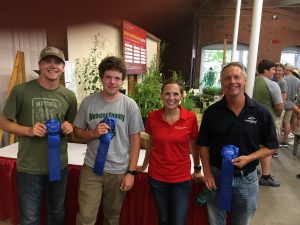
Wyatt Bailey, junior in Agronomy, won the general category of the 2022 Weeds Identification contest at the Iowa State Fair on Friday, August 12th. It may very well be the first time a current undergraduate student has won the category. The other categories are Future Agronomist, for those under 19 and Professionals, for weed scientists and previous winners of the general category.

Various graduates of agronomy have won the general and professional categories after graduating from agronomy. Dr. Bob Hartzler, retired professor and long-time Weed ID contest coordinator, does not remember another current undergraduate winning the category. And he did so with an exceptional score of 28 out 30.

As an agronomy student, Wyatt is a teaching assistant this Fall for the Crops Team since he won the contest last Fall and cannot compete.


The upcoming Crops Teams events will be October 15th for the regional contest, November 15 for nationals in Kansas City and November 19 for nationals in Chicago.


Researchers show weather variability impedes ability to assess trends in Iowa’s water quality

Skunk River with trees along the banks and crops ahead
graphic image of Iowa water sheds and data points for the study
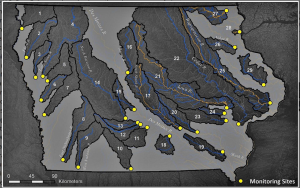
Data used in the study came from the Iowa watersheds indicated: Yellow circles indicate sampling locations.

When can we expect to see reduced levels of nutrients in our water if we make positive changes on the landscape? New Iowa State University research shows how complicated it is to give a sound answer to that question.

The research is featured in a recent article in the peer-reviewed Journal of Environmental Quality, co-authored by Ph.D. student Gerasimos J. Danalatos, Professor Michael Castellano and Associate Professor Sotirios V. Archontoulis, in Iowa State’s Department of Agronomy, and Calvin Wolter, a Geographic Information Systems analyst with the Iowa Department of Natural Resources.

Their study used a modeling approach, combined with water sampling data from 29 Iowa row-crop dominated watersheds monitored since 2001, to estimate the time it will take before the state can reliably identify a 41% reduction in nitrate loss to waterways from nonpoint sources, which originate primarily from agricultural land. The 41% goal reflects the state’s pledge in the Iowa Nutrient Reduction Strategy to reduce nitrate loss to waterways flowing into the Mississippi River, which contributes to the hypoxic dead zone in the Gulf of Mexico.

The researchers found the likelihood of measuring a statistically significant 41% reduction in flow-weighted nitrate concentrations across 15 years could be as high as 96%. That sounds encouraging. However, there was a huge range in the results across the 29 watersheds. The probability of measuring the 41% reduction (should it occur) ranged from about 23% to nearly 100%. The challenge of measuring or observing an actual reduction is primarily due to interannual (year to year) variability in precipitation.

“With that kind of range, it’s really hard to make good predictions and evaluate progress” Castellano said.

Of the water quality metrics evaluated, the researchers concluded that flow-weighted nitrate concentration offered the best opportunity to measure actual reductions in nitrate loss

“Focusing on nitrate concentration or total loss without flow-weighting tells you more about rainfall over time than about nitrate trends due to changes in land use and management” Danalatos said.

To test their ability to measure nitrate changes, the researchers used a novel approach, employing a Monte Carlo simulator, a scenario-generator that can quickly reflect the probabilities of many different situations. They ran more than 5,000 scenarios with the simulator.

In the process, they also examined several non-weather variables they thought could help explain nitrate trends, including land use and farm management changes, and soil organic matter, a measure of soil quality. Some weak relationships showed up between these variables, depending on the size of the watershed. They also looked at differences related to monitoring approaches, such as daily versus monthly sampling. In the end, properties associated with water discharge explained most of the across-watershed variation over time.

“Our results are the first to quantify just how important it is to account for interannual variability in nitrate loss when assessing long-term trends owing to changes in land use and management,” Castellano said.

“Our primary message from the research findings is that the policy-developed timelines we’re using to measure these trends do not align well with our ability to reliably track meaningful water quality changes,” Castellano said. “This is due primarily to the impact of weather. Moreover, if rainfall patterns are becoming more variable, the timeline to measure water quality changes is only going to get longer.”

The researchers emphasize good monitoring data from diverse watersheds over long time periods is critical to draw meaningful conclusions. They also stress that the challenges of measurement identified in this study further emphasize the need to draw on other relevant data when assessing water quality trends, especially land use change and adoption of conservation practices known to reduce nutrient loss.

According to Adam Schnieders, water quality resource coordinator for the Iowa Department of Natural Resources, the agency that funded the study, “The goal of the Iowa Nutrient Reduction Strategy is to achieve a 41% reduction in nitrogen and phosphorus loads leaving the state from nonpoint sources. Seeing this reflected in Iowa’s water quality will be the ultimate measure of success. This work helps us better understand how Iowa’s water monitoring data can be used to track progress toward these goals — and can help inform future efforts to account for the annual variability caused by the weather and other factors identified in this research.”

Researchers studying leaf angle aim to improve yields, inspire young scientists

The angle of the leaves on a corn stalk directly affects the plant’s ability to soak up the summer sun needed for photosynthesis. Breeders have developed various corn hybrids with an upright leaf angle, as opposed to a flat leaf, to assist in the photosynthetic process and improve crop yields, particularly in densely planted fields. Still, the genetic mechanisms that control this trait are relatively unknown. To better understand the underlying structure of leaf angle, an interdisciplinary research team, led by Iowa State University’s Jianming Yu, is working to identify the genes using a robot developed at Iowa State to capture 3D images of corn in the field as well as transcriptomic- and CRISPR-based tools. The research, supported by a four-year, $2.5 million National Science Foundation grant, has the potential to aid in the engineering of new hybrids and boost yields. “Knowing the exact genes and genetic mechanisms will make the future of breeding more efficient,” said Yu, a professor of agronomy and Pioneer Distinguished Chair in Maize Breeding. “Corn is a model crop and the information we gain can be leveraged by other crops, such as sorghum and millet, to improve their process.” In addition to improving yields – which helps limit land converted to crop production – Yu says scientists can use the genetic information to adapt future hybrids to changes in climate.

Deploying a robot in the field

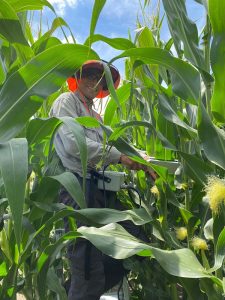
Previous large-scale field studies have examined one or two selected corn leaves to study leaf angle. But since leaf angle can vary across the canopy of a corn field and along the stalk of a single plant, affecting the amount of light reaching each leaf, Yu and his colleagues are taking a different approach. The research team will deploy a robot, called PhenoBot 3.0, to navigate the narrow rows of corn and capture 3D images of thousands of corn plants from different viewing angles and at multiple heights to automatically detect and measure leaf angles from the bottom to top of each plant. PhenoBot 3.0 (watch above video to see it in action) was developed by Lie Tang, a member of the research team and a professor of agricultural and biosystems engineering at Iowa State. “Using an AI-driven image processing algorithm to automate leaf angle measurement, we can use the PhenoBot to efficiently collect and analyze the data from the field,” Tang said. “Based on the results from preliminary studies, which we compared to measurements collected manually, the algorithm is very accurate.” Yu added, “With this enabling technology, we can better connect with DNA data to pinpoint genes and understand biology. That is where additional research in developmental genetics and CRISPR gene editing part of the research comes in.” Yu and Tang are faculty scholars with Iowa State’s Plant Sciences Institute, which encourages collaborations among plant scientists, engineers and computational scientists to develop novel approaches and technologies for studying crop biology.

Inspiring future scientists

Yu says the interdisciplinary research team is a good example of how biologists, engineers and plant scientists can take a holistic approach to a problem and find a solution. To inspire interest in future scientists, the team will work with K-12 educators to plant school gardens and help students learn about plant biology, agriculture and crop improvement. “We want to introduce students to the leaf angle research and show them how biologists, breeders or geneticists can improve the modern corn plant to help feed the world,” Yu said. Other members of the research team include: Aditya Raj and Xuan Liu, both graduate students in agricultural and biosystems engineering at Iowa State; Karlene Negus, an Iowa State graduate student in agronomy; Michael Scanlon, a professor of plant biology at Cornell University; Mark Lubkowitz, a professor of biology, and Valerie Bang-Jensen, a professor of education, both at Saint Michael’s College; and Bing Yang, a professor of plant sciences at the University of Missouri-Columbia.

Agronomists join forces with engineers to create innovative in-field research chamber to breed heat tolerant varieties

Students and professors from the ME415 capstone class

A multidisciplinary project at Iowa State University is harnessing engineering to solve agronomic challenges, enlisting undergraduates to develop an innovative research chamber to study soybeans’ responses in the field to current and future climate conditions.

This year, Asheesh “Danny” Singh, professor of agronomy at Iowa State, worked with seniors in Mechanical Engineering 415 Capstone Design classes to invent a practical, portable field-deployable research chamber. Essentially a mini greenhouse, the chamber is meant to offer new options to control conditions for plant testing in the field.

“Field testing of plants under future climate scenarios outside of the lab are vital, but really difficult to conduct,” Singh said.  “We need more capacity to test in-field interactions of soil health, moisture and temperature with plant vigor and health to better examine plant responses to the environmental stresses happening now and expected to escalate.”

Liza Van der Laan, an agronomy PhD student in Singh’s lab whose area of research is heat stress in soybeans, helped devise a general idea for the portable, mini-greenhouse project. Then, she worked with ME 415 teams in fall 2021 and spring 2022 to create a prototype. Their engineering challenges included creating something that would be low-cost, easy to move, durable and ideally solar-powered. The greenhouse also needed to be able to provide proper air flow and to maintain steady temperatures, especially at night.

The students developed a working model, which will be displayed during the 2022 National Association of Plant Breeders annual meeting in early August. They will host a stop on one of the convention’s field tours and present a poster exhibit at the conference.

Van der Laan expects at least one more semester of work will be needed with another ME 415 team to refine the model for use in research experiments.

Support has come from the USDA National Institute of Agriculture through the AI Institute for Resilient Agriculture grant and the National Science Foundation, with initial funding from Iowa State, including through the R.F. Baker Center for Plant Breeding and the Plant Sciences Institute. The partnership with the capstone students started in 2014-15 school year through the ISU’s Presidential Interdisciplinary Research Initiative support to develop mobile phenotyping units. Over the years, this association of Singh’s Soynomics team with ME 415 students has contributed to several successful grants from federal agencies.

“Opportunities to work with Dr. Singh and his Soynomics lab have been perfect for our final projects, where students work in small teams on real-world problems to develop and demonstrate their problem-solving skills as engineers about to enter professional careers,” said Jim Heise, professor of practice in mechanical engineering.  “Many do not have any experience with agriculture, so this gives them exposure to new fields.”

Introducing agriculture to non-ag students has been one of Singh’s motivations for working with the capstone program over the years as part of a long-standing partnership with Heise.

“We’re going to need plants to be even more efficient and resilient,” Singh said. “Solving more complex problems like this will require multiple disciplines working together on new tools. The capstone course provides a great opportunity to bring our problems to young engineers and leverage their creativity. We pay their expenses, and they learn more about the process of turning ideas into products, as well as an area of science that is fundamental to life on earth. It also helps prepare future agriculture leaders to use engineering tools to tackle tomorrow’s challenges in crop production.”

National University of Rosario lecturer studies crop attributes at Iowa State University

Ezequial sitting on the Iowa State University wall with the campanile in the background

Ezequiel Saenz, a lecturer at the National University of Rosario (Faculty of agronomy, Zavalla, Argentina), is visiting Iowa State University as a visiting scholar under the guidance of Dr. Sotirios Archontoulis, associate professor in agronomy. The program focuses on researching soybean and corn quality attributes important to the food processing industry. During the 3-month program, Ezequiel will collect and analyze field data and conduct report development. “One of my major goals visiting Iowa State University is to experience the daily life in a top-class research group. Moreover, I aim to enrich my crop modeling knowledge during my stay at the Integrated Cropping Systems Lab.”

Ezequial almost invisible standing between two rows of corn

Currently, Ezequiel is leading field trials related to leaf area evolution across the corn crop cycle while also working on a kernel growth project that studies the grain-filling period across different corn hybrids released in the market in the last 30 years. Collaborating with Dr. Archontoulis and others in his lab allows Ezequiel to build upon his previous knowledge and research on carotenoid profiles in maize genotypes while comparing and contrasting crop production in different climates. The most memorable experience thus far for Ezequiel was when he had the opportunity to present his previous work in Argentina with lab members at the Integrated Cropping System lab.

After his visiting scholar program ends on August 31, 2022, Ezequiel will return to the National University of Rosario, where he plans to complete his Ph.D. in the school of agricultural sciences. Ezequiel plans to continue collaborations with Dr. Archontoulis as he works to predict how different environmental scenarios affect corn seed yield and kernel quality in Argentinean cropping systems.

Written and originally posted by Global Programs

Reminiscing on a 70 year career in soil science

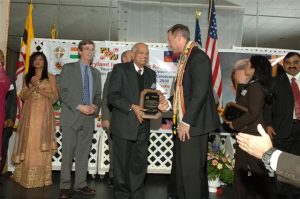
Governor of Maryland, Martin O’Malley, recognizing international collaboration with India.

Dr. Prabhakar Tamboli was born in 1928 in Gwalior, India 190 miles south of New Deli. He was born to a middle class family. They lived in a temporary house where he walked nearly three miles to primary school. Prior to antibiotics and vaccines, he missed an entire year of his early education while he suffered from various illnesses.

Driven for a better life, he attended Victoria College while working for an auto body shop. He would wake up at 2:30 am to study before going to class. He clocked into the auto body shop after school for the day.

“After I got a job, so did my father,” said Tamboli. “My life improved considerably. Then my dad retired but had no pension.”

Tamboli persevered. He received his bachelor’s degree in chemistry and biology from Victoria College in Gwailor. He did his graduate work in soil science as a government fellow with the Indian Agricultural Research Institute in New Delhi. After graduating he stayed, becoming a lecturer.

As a chief chemist with government of Madhya Bharat, he established the first soils department for the state. Tamboli longed to get his PhD but funding was an issue. By this time he was married with two children and supporting his parents. He couldn’t make it work on a lecturer’s salary.

The trajectory of Tamboli’s life changed when he was selected as a Rockefeller Foundation Fellow. Over 300 applications and he was one of three awardees that year.

“I found myself in Ames, Iowa to do my PhD work in soils research,” said Tamboli.

His dissertation focused on the impact of tillage on physical properties of soil. Work that laid the foundation for what’s commonly known as no-till today.

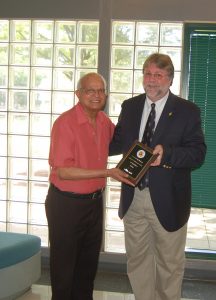
Excellence in Teaching Award from the Department of Environmental Science and Technology and awarded by Chairman Dr. Bowerman.

After earning his doctorate, Tamboli returned to India where became professor and associate dean at Jawaharlal Nehru Agricultural University at Jabalpur. There he established the soils research program in collaboration with the University of Illinois.

The United States Agency for International Development (USAID) stepped up and funded Dr. Tamboli to establish soil testing facilities across the country.

The United Nations Food and Agriculture Organization (FAO) took note of the great work Tamboli was doing. He was a soil fertility expert for the organization based in Rome. He established fertilizer use for eight different crops in Afghanistan during his years with the FAO.

Then Tamboli was hired by The World Bank in Washington, D.C.  As senior agriculturist, he worked on 17 countries in East Africa. He established training programs and crop production programs. Ultimately, he was transferred to Southeast Asia, where he provided guidance on the soils and agriculture sector for 18 years.

Upon retiring at 62, Tamboli decided now was the time to teach. Even today, at 93-years-old, Tamboli teaches an undergraduate course on international crop production challenges of 21st century at the University of Maryland. It has become an essential part of undergraduate agricultural education.

“I hope to educate and inspire these students,” said Tamboli.

It didn’t just stop at teaching. Tamboli leveraged his experience building training programs to invite people from developing countries to learn about modern technology that would be useful in their home countries. The governor of Maryland presenting him an award for international collaboration.

“Looking back, Ames was the most unique experience of my life,” said Tamboli. “I’d never seen snow in my life until I came to Iowa, and we got six feet that year. I couldn’t open the door of my apartment in Pammel Court. Never felt so much cold in my life.”

His Ph.D adviser, Dr. W.E. Larson . He quickly learned the most important things take time. He worked in the field with Drs. Larson and Kirkham. Dr. Heady, from the Economics Department and namesake of Heady Hall, was on his committee.

“I got such a rounded experience and training in different fields related to agriculture that increased my horizon of thinking of the entire system rather than the individual component,” said Dr. Tamboli. “Each part of the system has to be synchronized like the parts of a car. You can’t say one part is more important than the other. They’re all required to be successful.”

After a successful career in science, Dr. Tamboli asks his students to think big.

“What is your long-term and short-term goal in life,” said Tamboli. “Who is your mentor? In order to be successful in your career you need to follow your passion. Follow what gives you satisfaction and use that to set your course.”

USDA AgDiscovery comes to Agronomy

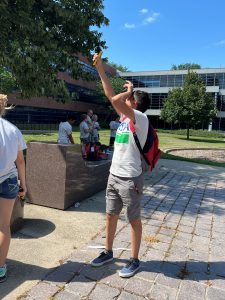
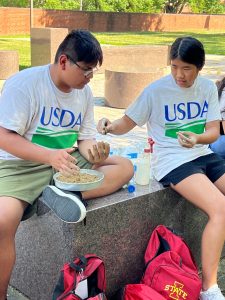
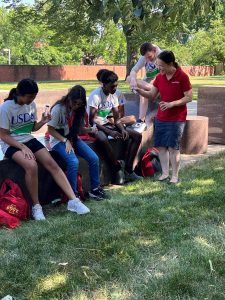
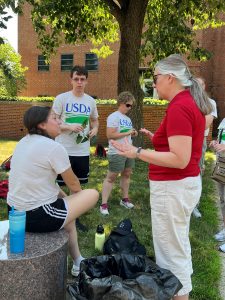
We were excited to host 16 high school students from across the country this week for the USDA- Animal and Plant Health Inspection Service (USDA-APHIS). AgDiscovery is a unique opportunity for students to explore agricultural sciences and gain knowledge about careers in animal and plant disciplines, wildlife management, veterinary medicine, biotechnology, entomology, food safety, food production, agribusiness, forestry, and much more. Students experience hands-on learning workshops, behind-the-scenes tours, laboratory and field exercises, and a variety of character- and team-building activities.

Students learned about weather and climate and its role in plant development from graduate student Richard Cirone. Amber Anderson talked to the group about soil types and the importance of healthy soils.


Licht receives Arden R. Campbell award

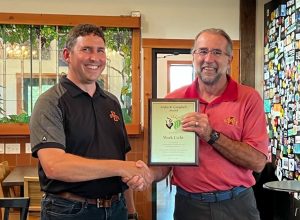
Dr. Mark Licht was presented the Arden R. Campbell award. The award recognizes a faculty member who has made notable contributions and provided distinguished service to the M.S. in Agronomy Distance Education Program.

It was presented to him during the reception and dinner of the online program’s capstone class. The only time the online students come to campus during their time in the program.

Mark’s service to the MS in Agronomy program started in 2016. He has taught classes for 16 sessions including the capstone Agronomy 594 and Agronomy 591 which dives into systems analysis. In addition to teaching, Mark is major professor or a committee member for 14 students.

The Arden R. Campbell Award is named in honor of Dr. Arden Campbell who was instrumental in the creation of Agronomy 511 and taught it for 14 years, including after he was technically retired.  He served on the Crops Development Team that coordinated the development and delivery of several courses and was a member of the Coordinating Committee that oversaw the development of the Agronomy M.S. program.  Dr. Campbell is known for his commitment to student learning and his outstanding citizenship to the Department of Agronomy.


Deborah Muenchrath Award winner: Alex Helms

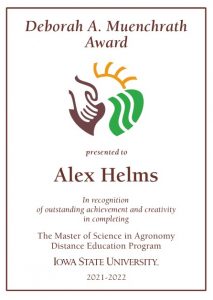
Congratulations to Alex Helms, online Agronomy master’s student, for winning the 2022 Deborah Muenchrath Award for the most outstanding creative component.

Alex graduated from Purdue University in 2015. The flexibility of Agronomy’s online masters program made it easy for him to pursue his education while working full time. He is a farm technical coordinator for the Purdue University research farms.

“My experience in the program was great,” said Alex. “I enjoyed the perspectives from people all over the country through discussions and assignments.”

Alex looked at the effect of potassium fertilizer in a no-till corn and soybean rotation with very low potassium testing soil. He was particularly interested in the potassium fertilizer rate to optimize yield and economic return in potassium deficient soils. He was advised by top soil scientist, Dr. Antonio Mallarino.

“Dr. Mallarino is one of the most respected soil fertility scientists among Universities,” said Alex. “Listening to his perspective about the practical implications of his research and others has been really great for me.”

Soil fertility has always been interesting to Alex. Being able to answer a question applicable to his work will help him better advise others on proper fertilizer recommendations as well as his own farm. In addition, Alex sees value in optimizing fertilizer applications and the impact on the environment.

“It’s important to revisit potassium fertilizer recommendations occasionally to ensure they are sufficient for modern cultivars so that overapplications do not pose unnecessary risk to the environment and reduce profitability for the farmer,” said Alex.

The award is named in honor of Dr. Deborah Muenchrath, who served as a course developer, faculty member and dedicated student mentor. Deb is remembered for her incredible creativity, amazing intellect, abiding commitment to students, and triumphant spirit. ” Learn more about Dr. Muenchrath in her ISU Plaza of Heroines profile.